
June 19, 2026
360º Virtual Experience Activity
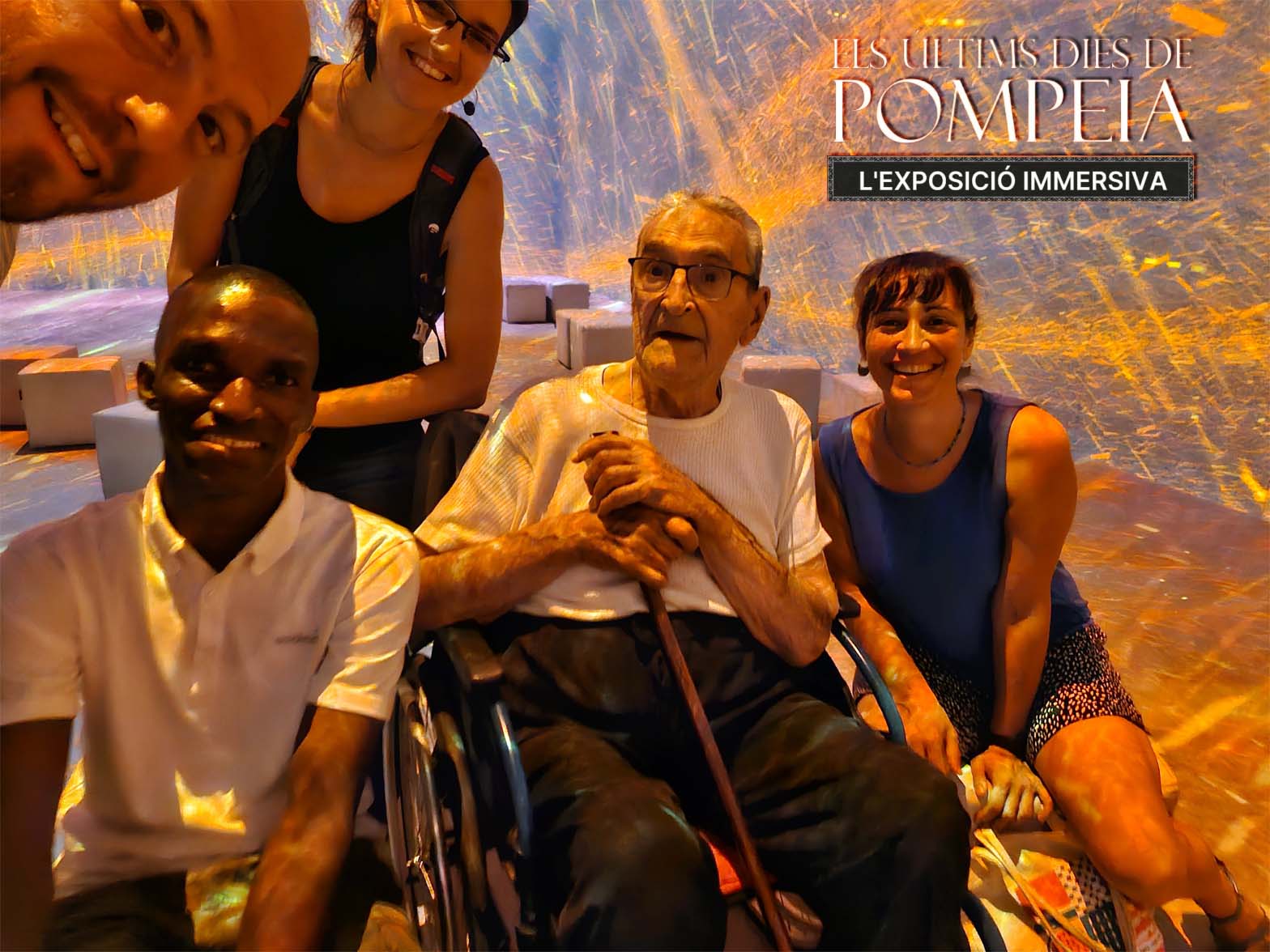
The immersive experience The Last Days of Pompeii takes visitors on a multisensory journey into the heart of the Roman city, brought to life through spectacular video projections, evocative soundscapes and interactive installations. Emblematic spaces from the period, gladiator battles and the devastating eruption of Mount Vesuvius are presented in an impressive digital recreation of history experienced in the first person.
- Date
- June 19, 2026
- Time
- 17:00 – 20:00
- Venue
- Ideal Montjuic
- Address
- Pl. de Carles Buïgas, 7, Sants-Montjuïc, 08038 Barcelona
- Google Maps
- Open map
- Venue website
- https://idealbarcelona.com/agenda/6363/
What is IDEAL?
IDEAL Barcelona, currently located in the Palau Victòria Eugènia in Montjuïc, is the city's leading Digital Arts Centre. It is not a traditional museum with paintings and display cases, but a technological space where art and history are experienced in three dimensions.
It uses cutting-edge tools such as:
- 360-degree projections on the walls and floor that completely surround you.
- Virtual Reality (VR) headsets to digitally walk through the settings as if you were really there.
- Interactive rooms where visitors can touch, experiment and activate elements through their movement.
What happened in Pompeii? Historical summary
For those who do not know the story, Pompeii was a prosperous and lively city of the Roman Empire in southern Italy, right at the foot of Mount Vesuvius. It was known for its trade, its impressive villas and a very active social life.
The tragedy happened in 79 AD:
- The eruption: Vesuvius, which had been dormant for centuries, suddenly erupted with extreme violence.
- Buried city: it released a massive shower of ash, pumice stone and toxic gases that completely covered the city within a few hours.
- Frozen in time: the ash acted as a protective shield, preserving houses, streets, objects and even the outlines of people exactly as they were at the moment of death.
Thanks to archaeology, today it is one of the most important collections of ruins in the world because it allows us to understand very precisely what everyday life was like in ancient Rome.
Activity completed